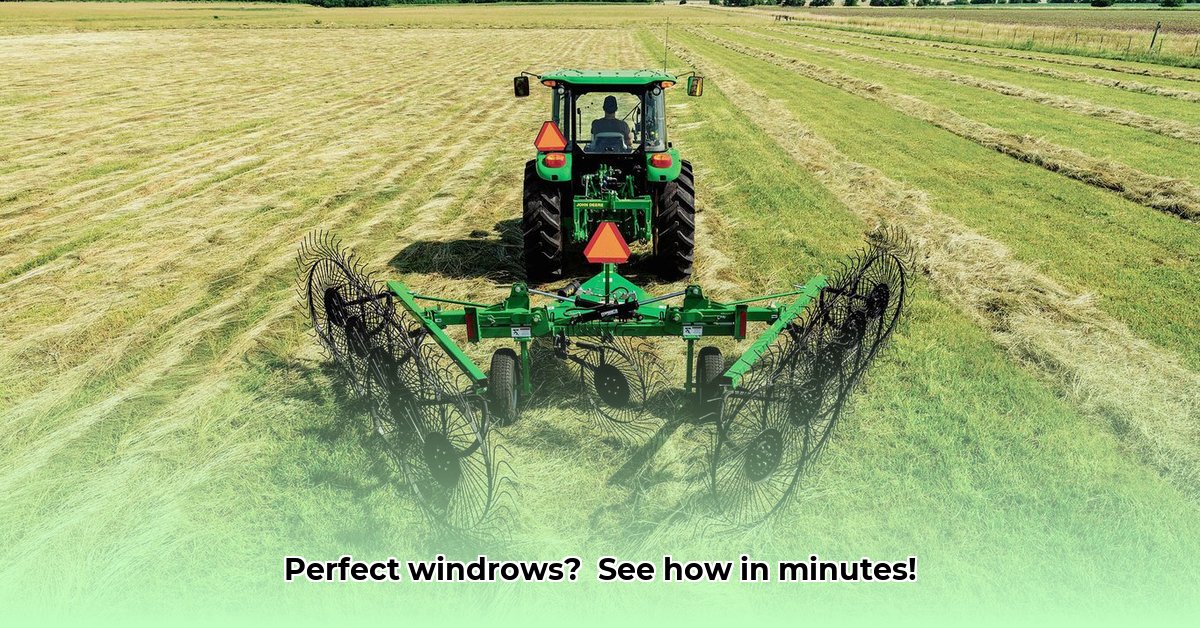
Tractor Raking Hay: Mastering the Art of Perfect Windrows
Getting perfect hay windrows isn't magic; it's about mastering the right techniques and using the appropriate tools. This guide provides a step-by-step approach to improve your hay quality and boost efficiency, regardless of your experience level. For more in-depth information on hay rakes, check out this helpful resource.
Prepping the Field: Laying the Foundation for Success
Before you start raking, properly prepare your field. This crucial step ensures smooth, efficient raking and minimizes equipment damage.
Weed Removal: Eliminate weeds and unwanted vegetation. These can clog your rake and compromise hay quality. Pre-harvest weed control is highly recommended.
Leveling the Terrain: While perfect flatness is rarely attainable, level out major bumps or dips. Uneven terrain leads to inconsistent windrows and potential rake damage.
Equipment Check: Thoroughly inspect your tractor and rake. Check fluid levels, tire pressure, and ensure all moving parts are functional. Preventative maintenance saves time and money in the long run. Don't forget to fuel up!
Weather Watch: Monitor the weather forecast. Rain or strong winds hinder the drying process. Raking in unfavorable conditions reduces hay quality and efficiency.
Choosing Your Rake: Selecting the Right Tool for the Job
Choosing the right rake significantly impacts your efficiency and hay quality. The optimal rake depends on several factors:
Farm Size: Rotary rakes excel in large operations due to their speed and efficiency. Wheel rakes are better suited for smaller farms.
Terrain: Wheel rakes navigate uneven or hilly terrain more effectively due to their maneuverability. Rotary rakes perform best on flat terrain.
Hay Type: Certain rakes handle specific hay varieties better. Parallel rakes often gently handle delicate crops. Research different rake types to determine the best fit for your needs. Consider consulting with experienced farmers or agricultural equipment suppliers.
Mastering Raking Technique: Creating Perfect Windrows
Raking is a skill. Efficient raking creates consistent, well-formed windrows for optimal drying and minimal spoilage.
Windrow Size Determination: The ideal windrow size depends on hay type, weather conditions, and experience. Aim for windrows wide enough for sufficient air circulation but not so wide that the center remains damp.
Adjusting Tractor Speed and Rake Settings: Experiment to find optimal settings. Slower speeds often create more uniform windrows, especially in denser hay or uneven terrain. Adjust settings as needed during the process.
Continuous Monitoring and Adjustment: Constantly monitor windrow formation and adjust accordingly. Ensure uniform size, shape, and even drying. Regular observation is crucial for optimizing results.
Maintenance and Troubleshooting: Keeping Your Rake in Top Condition
Regular maintenance ensures longevity and efficiency.
Routine Checks:
- Lubrication: Regularly lubricate moving parts to prevent wear and tear.
- Cleaning: Remove debris and hay from the rake teeth and components after each use.
- Inspection: Check for worn or broken parts, and repair or replace promptly.
Common Problems and Solutions:
| Problem | Potential Causes | Solutions |
|---|---|---|
| Clogged Rake Teeth | Excessive weeds, damp hay, foreign objects | Thorough cleaning; pre-harvest weed control; adjusting working conditions |
| Uneven Windrows | Incorrect rake settings, uneven terrain, varying hay density | Adjust rake settings and tractor speed; consider terrain adjustments; work in sections |
| Broken Rake Components | Wear and tear, impact with objects, improper maintenance | Replace or repair damaged parts; prioritize consistent preventative maintenance |
The Economics of Hay Raking: Maximizing Profitability
Hay raking costs encompass equipment investment, fuel consumption, labor, and maintenance. Efficient techniques and well-maintained equipment minimize expenses and maximize yields.
How to Choose the Best Hay Rake for Optimal Windrow Formation and Yield
Understanding your specific needs is paramount. Consider:
Farm size: Do you need a high-speed rake for larger areas, or a more maneuverable rake for smaller, more complex fields?
Terrain: Will you need a rake that can handle uneven ground, or will your fields be relatively flat?
Hay type: Does your hay type require a gentle raking process, or is a more aggressive method acceptable?
Rotary Rakes: Speed and Efficiency for Large-Scale Operations
Rotary rakes are ideal for large fields due to their high speed and efficiency. However, they're less suited for uneven terrain or delicate hay.
- Pros: High speed, excellent for large fields, gentle on the hay.
- Cons: Expensive, less suitable for uneven terrain, higher fuel consumption.
Parallel-Bar Rakes: Maneuverability and Precision for Smaller Fields
Parallel-bar rakes excel in smaller fields and uneven terrain due to their maneuverability. They're more precise but slower than rotary rakes.
- Pros: Excellent maneuverability, suitable for small and uneven fields, generally less expensive.
- Cons: Slower operation, less ideal for very large fields.
Optimizing Windrow Formation: Finding the Sweet Spot
Windrow size directly impacts drying efficiency. Too wide, and the center may not dry. Too narrow, and the baling process becomes less efficient. Experiment to find the optimal windrow width for your circumstances.
Pre-Raking Field Preparation: Essential for Success
Clear debris from the field before raking. Rocks, sticks, and other obstructions can damage the rake or produce uneven windrows.
Rake Maintenance: Protecting Your Investment
Regular maintenance prevents breakdowns. Follow the manufacturer's recommendations for lubrication and inspection. Address problems promptly.
Troubleshooting Common Hay Raking Issues
- Clogged rakes: Inspect and clear blockages.
- Uneven windrows: Adjust rake settings and tractor speed.
- Excessive leaf loss: Use gentler tines or reduce speed.
Sustainable Haymaking Practices: Protecting the Environment and Bottom Line
Sustainable practices involve minimizing fuel consumption by planning efficient routes and optimizing rake settings. Reduce soil compaction by using appropriate raking techniques. Consider the long-term impact on soil health and repair costs.
https://www.farmry.com/blogs/news/choosing-the-right-type-of-hay-rake-for-your-farm
Tractor Raking Hay
Content about tractor raking hay (Auto-generated fallback due to API error).
Tractor Raking Hay
Content about tractor raking hay (Auto-generated fallback due to API error).